Nohena Insights · Operations
Digital freight forwarding Nigeria for competitive advantage
The future of Nigerian freight forwarding is digital. This guide explores how to leverage AI and technology to optimize customs compliance, manage risk, and adapt for a sustainable competitive advantage.
Nohena · 15 September 2026 · 8 min read
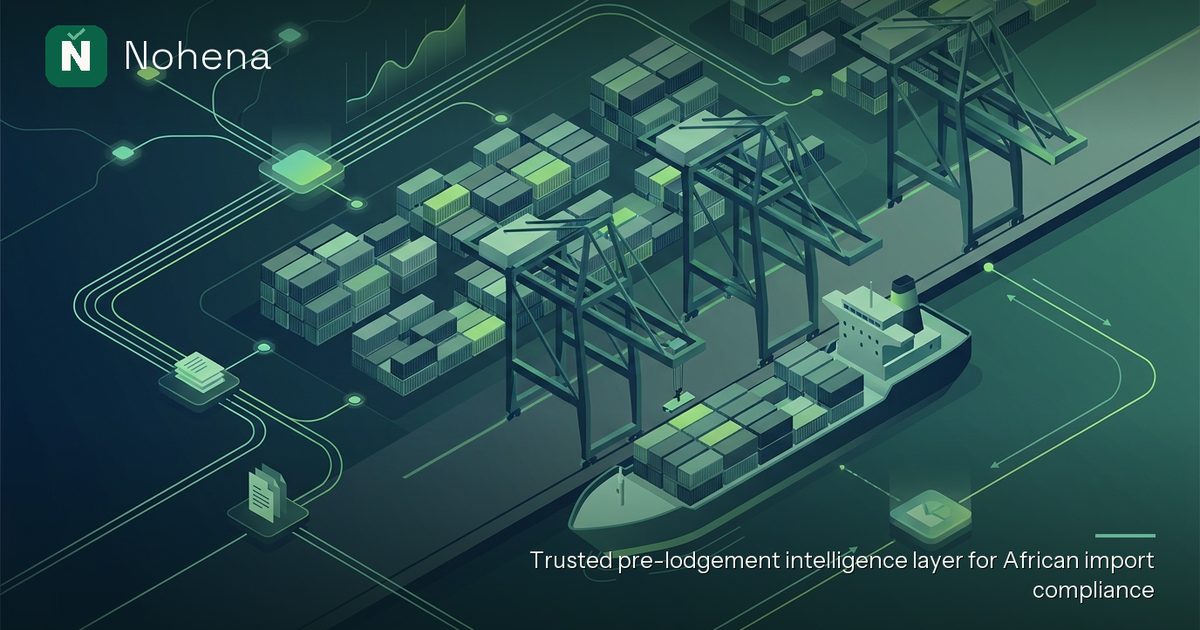
The Future of Freight Forwarding in Nigeria: Leveraging Technology for Competitive Advantage
The future of freight forwarding in Nigeria is the strategic adoption of technology to automate compliance, enhance supply chain visibility, and build a sustainable competitive advantage. For agents and importers, this shift towards digital freight forwarding in Nigeria is not a matter of if, but when and how.
The traditional model, reliant on manual paperwork, fragmented communication, and reactive problem solving, is increasingly inadequate. It struggles against the complexities of modern trade, from the Nigeria Customs Service (NCS) risk engines to the documentary rigors of the African Continental Free Trade Area (AfCFTA). Technology offers a clear path to greater efficiency, accuracy, and foresight.
The Core Components of Digital Freight Forwarding in Nigeria
Digital freight forwarding in Nigeria integrates key technologies to automate processes, improve data accuracy, and provide real-time visibility across the supply chain. This represents a fundamental move away from siloed information in emails and spreadsheets toward a single source of truth for every shipment. It is about building a system of record that is both transparent and defensible.
Key components include:
Centralized platforms. These systems consolidate all shipment data, documents, and communications into a single, accessible dashboard. This mirrors the direction of government initiatives like the Nigeria Single Window Trade Portal, which aims to create a unified interface for trade stakeholders.
Process automation. Repetitive, rules-based tasks are prime candidates for automation. This includes preparing data for the Single Goods Declaration (SGD), generating status updates for clients, and performing initial consistency checks across documents like the Form M and the Pre-Arrival Assessment Report (PAAR).
Data analytics. By structuring trade data, forwarders can move from hindsight to foresight. Analytics can reveal patterns in customs queries, identify the root causes of delays, and forecast total landed costs with greater accuracy, enabling better supply chain optimization.
Enhanced visibility. Digital tools provide stakeholders with real-time tracking information, moving beyond simple vessel location to include updates on customs clearance status, potential holds, and final delivery milestones.
AI's Role in Optimizing Customs Compliance and Risk Management
Artificial intelligence helps forwarders and importers proactively manage customs compliance by analyzing complex trade data to flag risks and inconsistencies before a declaration is prepared for lodgement. The core challenge in customs clearance is information asymmetry; the NCS uses sophisticated risk assessment systems to analyze declarations, while many declarants still rely on manual checks. AI-powered decision support helps level the field.
AI's application is most potent in three critical areas:
HS Code Classification. The ECOWAS Common External Tariff (CET) used in Nigeria is a complex, 10-digit system. An incorrect HS code is a primary driver of customs disputes, delays, and penalties. AI models can analyze technical product descriptions, material composition, and intended use against the tariff book's legal notes and past classification rulings to recommend the most appropriate and defensible heading. This reduces subjective judgment and provides a clear rationale for the chosen code.
Valuation Assessment. Customs valuation is governed by the principles of the WTO Valuation Agreement, with transaction value as the primary basis. However, the NCS will scrutinize declared values that appear inconsistent with its own data. AI can analyze a commercial invoice, freight charges, and other costs against historical benchmarks to flag a declaration that is likely to receive a valuation uplift. It can also ensure all dutiable additions to the price, such as certain assists defined under Article 8, are correctly factored in, and that defaults, like the 1.5% of FOB plus freight for insurance, are applied correctly when needed.
Document Consistency Verification. A typical import requires a suite of documents, including the commercial invoice, Form M, PAAR, Bill of Lading, and potentially certificates from the Standards Organisation of Nigeria (SONCAP) or NAFDAC. A minor discrepancy, such as a mismatched goods description between the invoice and the Form M, can trigger a query and delay the entire clearance process. AI can cross-reference dozens of data points across all documents in seconds, flagging inconsistencies for correction before the declaration is finalized.
Tools that provide this level of analysis enable a more strategic approach. For example, a platform like Nohena prepares a lodgement-ready declaration and document pack that has been pre-validated against these risks, allowing the licensed agent to lodge with greater confidence.
Practical Steps to Leverage Logistics Technology
Businesses can leverage logistics technology by first auditing their current processes, then strategically adopting tools that address their most significant pain points, such as compliance, visibility, or cost management. A haphazard approach can lead to wasted investment and poor adoption. A deliberate, phased implementation is more effective.
Consider this framework:
Audit your current workflows. Map out your entire process from pre-shipment to final delivery. Identify where manual data entry occurs, where communication breaks down, and what the most common sources of customs queries or delays are.
Define clear objectives. What is the primary goal? It might be to reduce the average number of customs queries per month, lower demurrage and storage costs, improve client satisfaction through proactive updates, or simply free up your team's time for more strategic work.
Prioritize technology adoption. Not all technology delivers the same value. Use a simple matrix to decide where to focus first. A business struggling with frequent customs penalties should prioritize compliance tools over client-facing visibility portals, for example.
Focus on data hygiene. Technology is only as effective as the data it processes. Train your team and educate your clients on the importance of providing complete and accurate commercial invoices, detailed product descriptions, and timely documentation. Garbage in, garbage out.
Invest in training and change management. New tools require new ways of working. Ensure your team understands not just how to use the software, but how to interpret the insights it provides to make better decisions.
The following table offers a simple decision-making framework:
The Impact on the African Continental Free Trade Area (AfCFTA)
Technology is essential for navigating the complexities of the AfCFTA, particularly for verifying rules of origin and optimizing new regional supply chains. The agreement's promise of a single market with reduced tariffs depends entirely on the ability of businesses to prove that their goods qualify. This creates a significant documentary and computational burden that is best managed digitally.
For goods to qualify for preferential tariffs under AfCFTA, they must meet specific Rules of Origin (RoO). For many products, this involves demonstrating a regional value content (RVC) of around 40%. Manually calculating this for complex manufactured goods is prone to error. Digital solutions can help by:
Automating RVC calculations. By integrating with a company's bill of materials or enterprise resource planning system, software can automatically calculate the RVC to confirm eligibility.
Managing certificates of origin. Digital platforms provide a secure, auditable repository for storing and managing the certificates required to claim preferential treatment.
Optimizing regional logistics. As trade corridors within Africa expand, technology will be crucial for identifying the most cost-effective and time-efficient routes, factoring in border crossing times, transport modes, and compliance with schemes like the ECOWAS Trade Liberalization Scheme (ETLS) and its 0.5% levy.
Navigating Data Privacy and Security
Adopting digital freight solutions requires a strong focus on data security and compliance with regulations like the Nigeria Data Protection Act (NDPA) to protect sensitive commercial information. As freight forwarding becomes more data-intensive, the responsibility to safeguard that data grows. Shipment data contains highly confidential information, including pricing, supplier relationships, and intellectual property embedded in product descriptions.
To mitigate risks, forwarders and importers must prioritize data governance. Key practices include:
Strict access controls. Ensure that only authorized personnel can view or modify shipment data, based on their role.
Data encryption. All sensitive data should be encrypted both at rest (when stored) and in transit (when being transmitted).
Vendor due diligence. Thoroughly vet the security and compliance certifications of any technology provider before entrusting them with your data.
Clear data policies. Establish internal policies that govern how data is collected, used, stored, and eventually deleted, in line with the NDPA's principles.
The move to digital is not just about efficiency; it is about building a more resilient, compliant, and competitive operation. For more analysis on trade and logistics, you can explore further insights on our blog .
FAQ
What is digital freight forwarding?
Digital freight forwarding uses technology to manage and automate the logistics of shipping goods. It replaces manual processes like phone calls and paperwork with centralized software platforms for booking, tracking, documentation, and customs compliance, providing greater efficiency and visibility.
How does AI help with customs clearance in Nigeria?
AI helps by proactively identifying risks before a customs declaration is prepared for lodgement. It analyzes shipment data to recommend the most defensible HS code, flags potential valuation issues, and verifies consistency across all documents to minimize the chance of queries, penalties, and delays from the Nigeria Customs Service.
Is it expensive to adopt logistics technology?
The cost varies widely, but not all solutions require a large upfront investment. Many modern platforms operate on a subscription or pay-per-use model, making them accessible to businesses of all sizes. The cost should be weighed against the potential savings from reduced demurrage, fewer customs penalties, and improved operational efficiency.
What is the first step my company should take towards digitalization?
The best first step is to conduct a thorough audit of your existing processes. Identify your biggest pain points, whether they are in compliance, client communication, or cost management. This analysis will help you define clear goals and choose technology that directly addresses your most critical business needs.