Nohena Insights · Operations
Freight forwarding in Nigeria needs real-time visibility
Real-time visibility is transforming Nigerian freight forwarding by replacing reactive problem-solving with proactive, data-driven decision-making, which significantly improves predictability and efficiency.
Nohena · 10 October 2026 · 8 min read
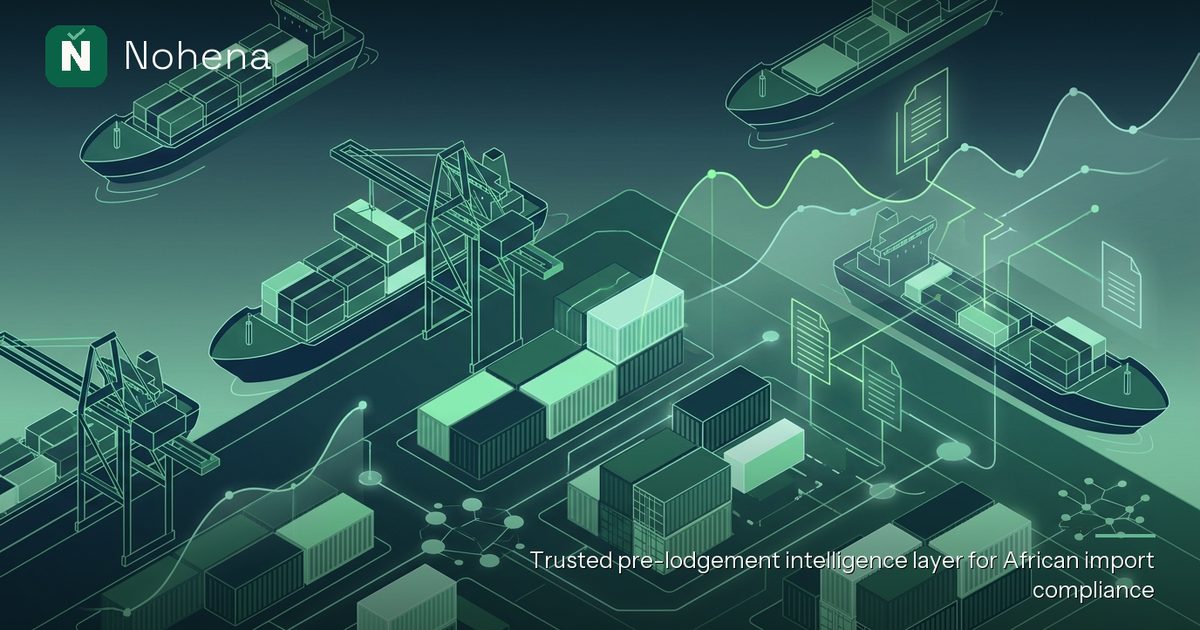
Real-time Visibility: The Future of Freight Forwarding in Nigeria
Real-time visibility is transforming Nigerian freight forwarding by replacing reactive, manual problem-solving with proactive, data-driven decision-making. This shift significantly improves predictability in the supply chain and enhances operational efficiency for both importers and their agents.
For decades, the movement of goods into Nigeria has been characterized by information asymmetry. Importers and their licensed customs agents often face an opaque process, reacting to delays as they occur rather than anticipating them. The journey of a container from a port of origin to a warehouse in Lagos or Kano is punctuated by communication gaps, manual document checks, and unpredictable waits at terminals and checkpoints. This lack of predictability translates directly into higher costs, primarily through demurrage, detention, and buffer inventory. The adoption of logistics technology focused on real-time supply chain visibility offers a structural solution to these persistent challenges.
What is real-time visibility in freight forwarding?
Real-time visibility in freight forwarding is the ability to track the precise location, status, and condition of goods, documents, and related processes at any point in the supply chain using live, integrated data streams. It represents a significant evolution from traditional tracking, which typically provides only periodic, milestone-based updates. True visibility synthesizes information from disparate sources into a single, cohesive view of the entire logistics workflow.
This comprehensive view includes more than just a dot on a map. It encompasses:
Physical tracking: The live location of a vessel, aircraft, or truck carrying the consignment, often using GPS and AIS (Automatic Identification System) data.
Status tracking: Critical event updates, such as a container being discharged from a vessel, positioned for customs examination by a terminal operator, or gated out of the port.
Condition monitoring: For sensitive cargo, IoT sensors can provide real-time data on temperature, humidity, and shock, which is essential for goods regulated by agencies like NAFDAC.
Document flow tracking: Monitoring the status of essential trade documents like the electronic Form M, the Pre-Arrival Assessment Report (PAAR) issued by the Nigeria Customs Service (NCS), and compliance certificates like SONCAP.
How real-time visibility improves predictability in Nigerian logistics
Real-time visibility improves predictability by providing the granular data needed to anticipate delays, manage exceptions proactively, and coordinate stakeholders with greater accuracy and less friction. Instead of discovering a problem after it has already caused a delay, agents and importers can see it developing and take corrective action. This capability directly addresses some of the most costly and time-consuming aspects of Nigerian import clearance.
Mitigating port congestion and demurrage
Congestion at major terminals like Apapa and Tin Can Island Port is a primary driver of unpredictable costs. When a container's availability for pickup is uncertain, scheduling transport becomes a guessing game, leading to wasted truck journeys or, more commonly, costly demurrage and storage fees. Real-time visibility provides the clarity needed to optimize this process.
Accurate ETAs: Knowing a vessel's true estimated time of arrival, adjusted for sailing delays, allows agents to better sequence pre-clearance formalities.
Terminal status updates: By integrating with terminal operating systems, a visibility platform can show the exact moment a container is discharged and available. This allows for the precise scheduling of customs examinations and truck dispatch, minimizing container dwell time and associated fees.
Demurrage risk alerts: Advanced systems can automatically calculate the last free day for a container and send alerts as the deadline approaches, prompting agents to prioritize its clearance.
Streamlining customs and regulatory compliance
Navigating Nigeria's trade regulations requires the careful orchestration of multiple documents and agency requirements. Delays often originate not with the physical goods but with paperwork. A missing PAAR, an expired SONCAP certificate, or an incorrectly prepared Single Goods Declaration (SGD) can halt a shipment indefinitely. Visibility into the documentation pipeline is as critical as visibility into the physical supply chain.
By tracking the status of key documents, an agent can ensure all prerequisites are met before a shipment arrives. This includes:
Form M and PAAR: Confirming the PAAR has been successfully generated and is linked to the bill of lading before preparing the customs declaration.
Valuation and HS code: Using the data from the PAAR to ensure the declared value and 10-digit HS code on the SGD are consistent, which is a key factor for customs risk engines. The Harmonized System (HS) code determines the duty rate, which can range from 5% to 35% under the ECOWAS Common External Tariff (CET), plus the 7.5% VAT.
Other government agency requirements: Ensuring that permits from NAFDAC or certificates from SON are secured and ready for presentation alongside the customs declaration.
Decision support tools use this visibility to prepare a lodgement-ready declaration and document pack. By flagging potential inconsistencies that a customs risk engine might query, they help the licensed agent prepare a submission that is more likely to be treated favorably. For more analysis on trade compliance, visit our insights page .
Enhancing stakeholder communication
A typical import involves the importer, a freight forwarder, a shipping line, a terminal operator, a customs agent, and a trucking company. Traditionally, communication between these parties is fragmented across emails and phone calls, leading to misunderstandings and delays. A centralized visibility platform acts as a single source of truth, giving all authorized stakeholders access to the same live information. This reduces administrative overhead and enables synchronized, collaborative action.
Implementing a visibility strategy: a framework for agents and importers
Implementing a visibility strategy requires a clear assessment of operational needs, a phased approach to technology adoption, and a focus on data quality and integration. It is not a one-size-fits-all solution; the right approach depends on the volume, value, and sensitivity of the cargo being managed.
Before investing in any technology, practitioners should consider the following:
Identify the primary pain point: Are you trying to reduce demurrage costs, provide better service to clients, or manage compliance risk? A clear objective will guide your strategy.
Assess data availability: What data can you access from your partners? Do your preferred shipping lines and terminals provide API access for automated data sharing?
Determine required granularity: Is vessel-level tracking sufficient, or do you need container-level status updates? For high-value pharmaceuticals, you may even need real-time temperature monitoring.
The following table provides a simple framework for comparing basic and advanced visibility approaches.
The future of Nigerian freight forwarding and digital transformation
The future of Nigerian freight forwarding lies in leveraging digital transformation to move from simple tracking to predictive and prescriptive logistics management. As technology matures and adoption grows, the focus will shift from knowing where a container is to knowing what will happen to it next and how to ensure the best possible outcome. This involves deeper integration with customs processes and a more sophisticated use of data.
Key trends shaping this future include:
Predictive risk assessment: The ultimate goal of visibility is foresight. By analyzing a shipment's data, including its origin, HS code, and declared value, advanced systems can predict how it will be treated by customs. Decision support platforms that prepare lodgement-ready declarations give agents this foresight, allowing them to see their declaration through the lens of a customs risk engine before submission.
AfCFTA and regional trade: The African Continental Free Trade Area will increase the volume and complexity of intra-African trade. Real-time visibility will be indispensable for managing multi-leg, cross-border supply chains and verifying rules of origin, such as the minimum 40% regional value content requirement for many goods to qualify for preferential tariffs.
Data security and compliance: As more sensitive commercial data is shared across platforms, adherence to regulations like the Nigeria Data Protection Act (NDPA) is paramount. Secure, compliant platforms will become a baseline requirement for doing business.
Ultimately, real-time visibility is not just about technology; it is about building more resilient, predictable, and efficient supply chains. For Nigerian freight forwarding, it offers a clear path away from chronic unpredictability and toward a future defined by control and foresight. Nohena prepares; the licensed agent lodges.
FAQ
What is the main benefit of real-time visibility for Nigerian importers?
The main benefit is a significant reduction in unpredictable costs, particularly demurrage, detention, and storage fees that arise from port delays. It also improves business planning by providing reliable forecasts for cargo arrival and availability.
Does real-time tracking help with customs clearance?
Yes, indirectly. While physical tracking monitors the container's location, integrated visibility platforms also track the status of critical documents like the Form M and PAAR. This allows a licensed customs agent to prepare and time the submission of the Single Goods Declaration (SGD) more effectively, ensuring all compliance requirements are met upon arrival to avoid customs-related delays.
Is this technology expensive for small freight forwarding companies?
The cost varies based on the level of sophistication. While comprehensive enterprise systems can be a significant investment, many modern platforms offer scalable, subscription-based solutions that can be cost-effective. The key is to analyze the return on investment by comparing the technology cost to the direct savings from avoided demurrage, penalties, and operational overhead.
How does supply chain visibility relate to regulations like SONCAP?
For goods requiring a Standards Organisation of Nigeria Conformity Assessment Programme (SONCAP) certificate, visibility is crucial for coordination. It allows an importer or agent to track the shipment's ETA and ensure the SONCAP certificate is secured and transmitted before the goods arrive. This prevents the shipment from being flagged for non-compliance, which is a common and costly bottleneck at Nigerian ports.