Nohena Insights · Trade finance
How warehouse receipt finance unlocks export capital
Warehouse receipt finance unlocks export capital by allowing exporters to use a receipt for goods stored in a licensed warehouse as collateral to secure funding from a bank or financier. This solves a key liquidity challenge for agricultural exporters.
Nohena · 19 November 2026 · 9 min read
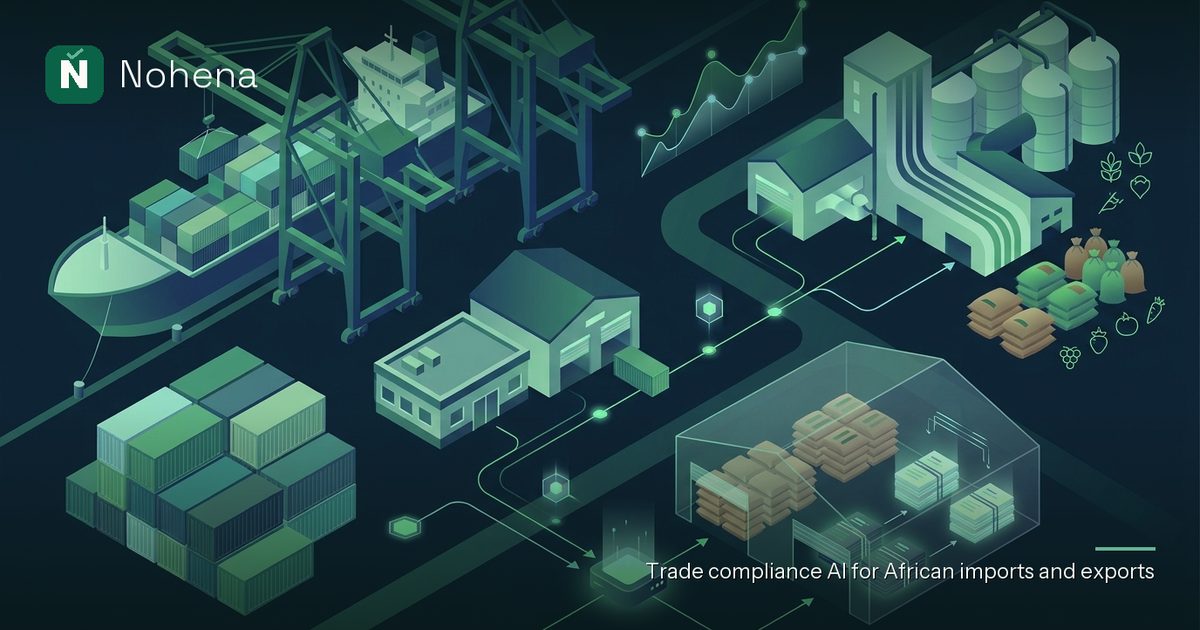
How warehouse receipt finance unlocks export capital
Warehouse receipt finance unlocks export capital by allowing an exporter to use a legal document, the warehouse receipt, as collateral to secure pre-export funding against the value of stored agricultural commodities. This mechanism converts static inventory into working capital, bridging the critical liquidity gap between aggregating goods and receiving payment from an international buyer.
For many Nigerian agricultural exporters, the period after aggregation and before export is a significant financial challenge. Capital is tied up in inventory, while funds are needed for logistics, processing, and meeting other pre-export costs. Warehouse receipt finance offers a structured solution, transforming stored goods from a cost centre into a bankable asset. It is a form of commodity collateral financing that hinges on a trusted, independent third party: the licensed warehouse operator.
What is warehouse receipt finance?
Warehouse receipt finance is a form of asset-based lending where an exporter pledges goods held in a licensed, independent warehouse as collateral for a loan. Unlike traditional corporate lending, which assesses a company’s balance sheet and credit history, this model focuses on the value and quality of the physical commodities being pledged. The integrity of the system rests on several key pillars.
The exporter : The owner of the agricultural commodities, such as sesame seeds, cocoa beans, or cashew nuts, who needs liquidity to fund the export process.
The commodities : The underlying asset must be a storable, gradable product with a reasonably stable and transparent market price. Perishable goods are generally not suitable.
The licensed warehouse : A certified third-party operator who acts as a custodian for the goods. This entity must be independent of both the exporter and the financier to ensure impartiality. Its role is to accurately grade, weigh, and store the commodity and to issue a credible warehouse receipt.
The warehouse receipt : This is a document of title issued by the warehouse operator. It legally confirms the existence, quantity, quality, and ownership of the goods stored at a specific location. The development of electronic warehouse receipts, guided by principles like the UNCITRAL Model Law on Electronic Transferable Records, is making this process more efficient and secure.
The financier : A commercial bank, development finance institution (DFI) like the Nigerian Export-Import Bank (NEXIM) or Afreximbank, or a specialised trade finance fund. The financier accepts the warehouse receipt as collateral, securing its loan against the value of the stored goods.
By isolating the commodity as collateral under the control of a trusted third party, warehouse receipt finance mitigates risk for the lender and provides a viable funding channel for exporters who may not qualify for conventional unsecured loans.
How the warehouse receipt financing process works for exporters
The process involves depositing graded commodities into a certified warehouse, receiving a warehouse receipt, and presenting this receipt to a financier as collateral for a loan. This structured pathway ensures that all parties have clear visibility and security over the transaction from storage to repayment.
An exporter of Nigerian cashew nuts, for example, would typically follow these steps:
Aggregation and grading : The exporter collects raw cashew nuts from farmers or aggregators. The nuts are then graded according to industry standards, such as nut count and outturn (kernel yield), often with verification from an entity like the Federal Produce Inspection Service (FPIS).
Depositing goods : The graded cashews are transported and deposited into a designated, licensed warehouse or a facility controlled by a collateral manager. The warehouse operator verifies the quantity and quality upon arrival.
Issuing the warehouse receipt : The operator issues a warehouse receipt to the exporter. This document is a detailed record, specifying the owner, the commodity (cashew nuts), the assessed quality (e.g., 48 lbs outturn), the total tonnage, and the storage location.
Applying for finance : The exporter presents the warehouse receipt to a partner financier along with a financing request. This application is usually supported by a valid export sales contract, which demonstrates a clear path to repayment.
Due diligence and loan agreement : The financier performs due diligence. This includes verifying the legitimacy of the warehouse receipt, confirming the credentials of the warehouse operator, and assessing the current market value of the stored cashews. The parties then sign a loan agreement detailing the loan-to-value (LTV) ratio, interest rate, fees, and tenure.
Pledging the collateral : The exporter legally pledges the goods to the financier. This is often done by endorsing the warehouse receipt in favour of the financier, which grants the lender constructive control over the commodity. The goods cannot be released from the warehouse without the financier's express permission.
Disbursement of funds : Once the collateral is secured, the financier disburses the approved loan amount to the exporter. These funds can be used for activities like cleaning, bagging, transportation to the port, and covering inspection fees.
Export and repayment : The exporter finalises the export, ensuring all Nigerian exit requirements are met, including the Form NXP, the 0.5% Nigeria Export Supervision Scheme (NESS) levy, and phytosanitary certification from the Nigeria Agricultural Quarantine Service (NAQS). Upon payment from the international buyer, the exporter repays the loan plus interest to the financier. The Central Bank of Nigeria (CBN) requires that non-oil export proceeds are repatriated within 180 days.
Release of goods : With the loan repaid, the financier releases its hold on the warehouse receipt, returning control to the exporter. The exporter then presents the receipt to the warehouse to claim the goods for export.
Comparing warehouse receipt finance to other export funding options
Warehouse receipt finance is distinct from other export funding options because it is secured by physical goods in storage, whereas others may rely on purchase orders, receivables, or the exporter's balance sheet. Understanding the differences helps an exporter choose the right solution for their specific needs and business stage.
The financier's perspective: what makes a strong case for funding
From a financier's perspective, a strong case for funding is built on the credibility of the warehouse receipt, the liquidity of the underlying commodity, and a clear path to repayment through a confirmed export sale. Lenders are not commodity traders; their primary goal is to ensure the loan is repaid. They assess risk by scrutinizing every component of the proposed transaction.
Key elements a financier will examine include:
A credible warehouse receipt : The receipt must be from a well-capitalised, insured, and reputable warehouse operator. The financier must trust that the paper accurately represents the physical goods.
A liquid commodity : Commodities with active, transparent pricing on global or regional exchanges (e.g., cocoa, sesame) are preferred. They are easier to value and, if necessary, to liquidate in a default scenario.
Verified quality and quantity : Independent verification is non-negotiable. This includes grading certificates from bodies like FPIS and lab reports from ISO/IEC 17025 accredited laboratories confirming the product meets contract specifications and the destination's limits, such as the EU's maximum residue levels (MRLs) for pesticides.
A valid export contract : A signed contract with a creditworthy buyer provides the primary source of repayment. The financier will assess the buyer's reputation and the terms of the sale.
A complete document set : An exporter's ability to prepare a full, compliant set of export documents is a proxy for their operational competence. This includes the Form NXP, commercial invoice, packing list, and any required certificates.
A clear path to repayment : The structure must show how sales proceeds will be collected and used to repay the loan, adhering to regulations like the CBN's 180-day rule for repatriating non-oil export proceeds.
For financiers, a complete and verified digital record of the transaction is essential for efficient decision-making. With the exporter's consent under the Nigeria Data Protection Act (NDPA), a read-only, lot-by-lot record of contracts, lab results, certificates, and warehouse receipts can be shared. Nohena shares such a consented record with the financier the exporter chooses, and the financier decides.
By turning inventory into collateral, warehouse receipt finance provides a powerful tool for growth. It enables exporters to scale their operations, fulfill larger orders, and compete more effectively on the global stage. For more analysis on trade compliance and finance, explore our full range of insights , or see how Nohena helps prepare trade records for financiers before a decision is made in a product demonstration . Nohena prepares . You, or your licensed agent, lodge and export.
FAQ
What is the difference between a warehouse receipt and a bill of lading?
A warehouse receipt is a document of title for goods held in a stationary, licensed warehouse, used for storage and as collateral for financing. A bill of lading is a document of title for goods in transit, issued by a carrier (like a shipping line) to a shipper, and it serves as a receipt for the goods, evidence of the contract of carriage, and a document of title for the goods being shipped.
Can any warehouse issue a receipt for financing?
No, financiers will generally only accept warehouse receipts from licensed, bonded, and independently audited warehouses or those operated by a reputable collateral manager. This is to ensure the integrity, security, and insurance of the underlying commodity, which serves as the lender's collateral.
What is a typical loan-to-value (LTV) ratio for warehouse receipt finance?
The loan-to-value (LTV) ratio varies based on the financier's risk appetite, the type of commodity, its price volatility, and the quality of the storage facility. However, LTV ratios commonly fall in the range of 60% to 80% of the commodity's current market value, with the financier maintaining the remaining percentage as a security margin against price drops.
What happens if the exporter defaults on the loan?
If an exporter defaults on the loan, the financier has the legal right to take control of the commodity collateral. Because the warehouse receipt was pledged to them, the financier can present it to the warehouse, take possession of the goods, and sell them on the open market to recover the outstanding loan amount, interest, and any associated costs.